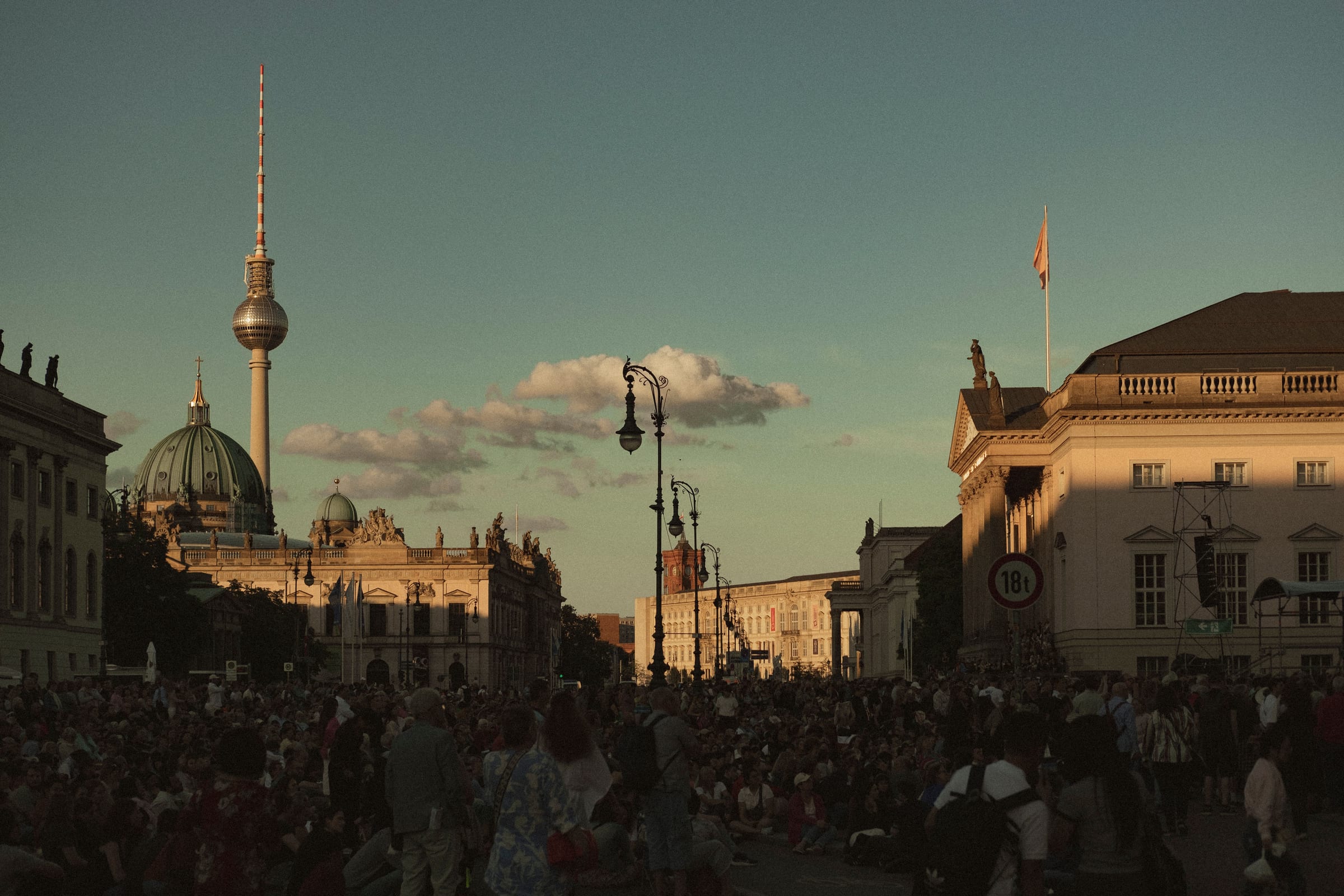
Capital and largest city of Germany
“Explore charming old towns, remarkable landmarks and hidden stories waiting around every corner.”
Berlin is the capital and largest city of Germany. With 3.7 million inhabitants, it has the highest population within its city limits of any city in the European Union (EU). The metropolis is also one of the states of Germany, being the third-smallest state in the country by area. Berlin is surrounded by the state of Brandenburg, bordering Brandenburg's capital Potsdam to the southwest. The urban area of Berlin has a population of 4.5 million, making it the second most populous in Germany after the Ruhr. The Berlin-Brandenburg capital region has around 6.2 million inhabitants and is Germany's second-largest metropolitan region after the Rhine-Ruhr region, as well as the fifth-biggest metropolitan region by GDP in the EU. Berlin is a global city of culture, politics, media and science.
What it’s like to be here — and what to go and see.
Gentle temperatures invite leisurely walks without the summer crowds.
Peak season buzz and golden light make every outing feel like an event.
Crisp air and golden colors set a peaceful backdrop for wandering.
Fewer visitors and cozy atmospheres make for a relaxed, unhurried visit.
A rough, general read — not a precise guide.
Getting around by metro, regional trains, trams, buses and ferries is easy, and a car is rarely needed.
Heavy traffic is typical for a city this size, though taxis are a convenient way around it.